Previous events
29th June – Annual Conference – Shaping The Future
Key Takeaways
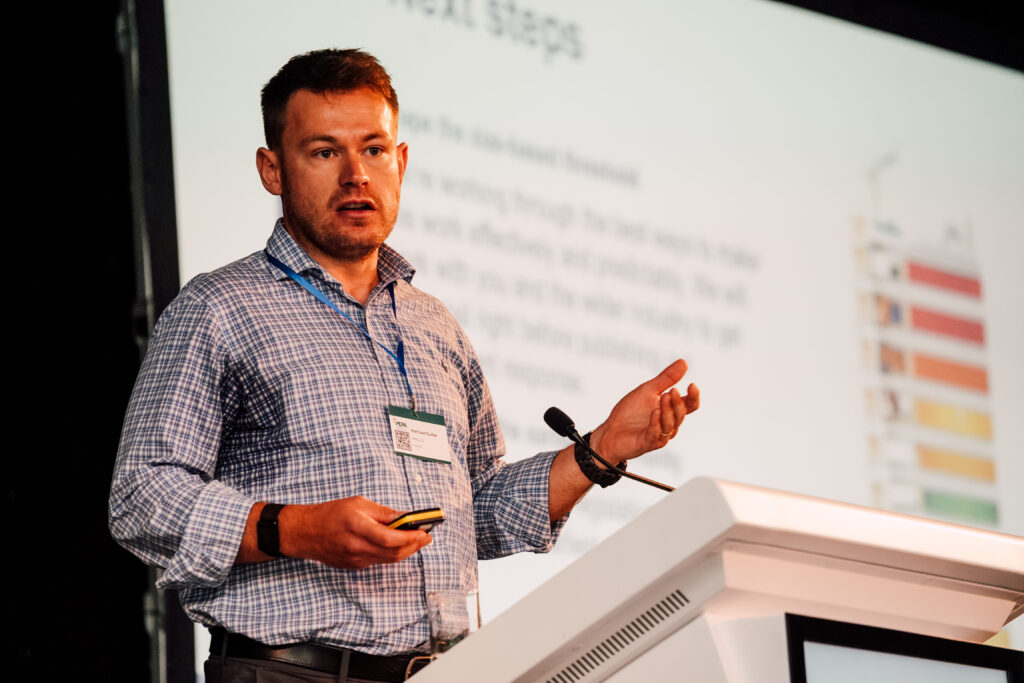
The overarching message from the conference was that the energy assessment sector remains busy and resilient but is entering a period of major transformation driven by EPC reform, MEES requirements, the Home Energy Model (HEM), and broader property resilience initiatives.
1. Strong Demand Despite Uncertainty
- Domestic EPC activity remains very strong, with 2026 currently tracking as the second-strongest January–May period on record.
- Demand for energy assessment services continues despite significant policy reforms and uncertainty.
2. Significant EPC Reform is Coming
- EPCs will move away from a single energy-cost rating to multiple metrics:
- Fabric Performance
- Heating System
- Smart Readiness
- Energy Cost
- The aim is to provide a more meaningful picture of building performance and support net-zero objectives.
3. Home Energy Model (HEM) Delayed but Critical
- The transition from SAP to the Home Energy Model is now expected in the second half of 2027.
- Assessors will need substantial upskilling, with new competency, auditing and compliance requirements.
- New digital platforms will underpin assessments and reporting.
4. MEES Requirements Will Drive Future Work
- Private rented homes are expected to meet EPC C-equivalent standards by 2030.
- Large commercial rented properties (>1,000m²) are expected to require EPC B by 2031.
- These changes are likely to generate significant demand for assessments, advice and compliance support.
5. Scotland is Taking a Different Approach
- Scotland plans to introduce new EPC ratings focused on:
- Heat Retention
- Heating System Performance
- Energy Costs
- EPC validity is expected to reduce from 10 years to 5 years.
- Stronger auditing and a new assessor accreditation scheme are proposed.
- Implementation has been delayed until 2027 to align with HEM.
6. Warm Homes Plan Creates Major Opportunities
- Upgrading up to 5 million homes.
- Installing over 450,000 heat pumps annually by 2030.
- Increasing solar deployment.
- Lifting up to 1 million households out of fuel poverty.
- Creating up to 180,000 jobs.
7. Commercial Market is Mixed
- Commercial EPC volumes have fallen, partly due to uncertainty around future non-domestic MEES requirements.
- Demand for Display Energy Certificates (DECs) is growing.
- Air Conditioning Inspections are up approximately 20%, driven by stronger enforcement and penalties.
8. Flood Resilience is Emerging as a New Assessment Area
- Flood Performance Certificates (FPCs) are being developed as a potential equivalent to EPCs for flood resilience.
- Insurers, lenders and government are increasingly interested in property-level flood resilience data.
- This could create a new professional opportunity for assessors beyond traditional energy assessments.
9. Landlords Support Efficiency Improvements but Cost Remains a Barrier
- Many landlords have already invested in achieving EPC C.
- Cost is the biggest concern, with £10,000 seen as a key affordability threshold.
- Lack of grant funding, uncertainty over future rules, and challenges with older properties are creating concern.
- There is a risk that some landlords may sell properties rather than invest in expensive upgrades.
Summary
For assessors, the profession is expanding beyond traditional EPC production. Future success will depend on adapting to new EPC metrics, HEM, stricter quality assurance, MEES compliance, and potentially new services such as flood resilience assessments. While policy change creates uncertainty, it is also expected to generate substantial new opportunities across both domestic and commercial markets.
2nd December – Annual Conference – Energy Efficiency & Beyond
PEPA held another successful in-person conference on 2nd December at Reach Conference Centre in Derby. Chairman, Andrew Parkin, welcomed delegates and gave a summary of the year and what’s still to come.
Jessica Skilbeck, Director Net Zero Buildings & Industry at DESNZ gave clear updates on the future of fuel poverty, support, energy efficiency and home decarbonisation, inc the key points below –
• Government is balancing immediate support on household bills with long-term decarbonisation.
• 2.7 million households in fuel poverty, with major financial and health impacts.
• £150 Warm Home Discount going to around 6 million families this winter.
• The ECO4 levy will end – shifting investment from energy bills to public funding.
• Strong acknowledgement of ECO4 quality issues, especially with solid wall insulation.
• Firm commitment to stronger consumer protections so households aren’t left fixing non-compliant work.
• Nearly £50 billion confirmed for the Warm Homes Plan – the biggest public investment in energy efficiency in UK history.
• Includes the Warm Homes Local Grant (£0.5bn) and Warm Homes Social Housing Fund (£1.3bn), supporting 200+ projects.
• Boiler Upgrade Scheme budget nearly doubled, expanding support for heat pumps and heat-storage technologies.
• Plans for minimum EPC C standards in rented homes remain on track.
• Future Homes Standard will require new homes to cut carbon by 75% – making heat pumps, heat networks and solar the norm.
• Major EPC reform in progress, introducing metrics for fabric, heating system, smart readiness and energy cost.
• Strong emphasis on partnership between government and industry as we move from policy development to implementation.
We were then joined by Matt Carey, Deputy Director for Energy Performance & Standards at DESNZ and Dr Jen Manuel, newly appointed Deputy Director of Building Insights at MHCLG to present on ‘Realising the Opportunity – the Changing Role of Energy Assessments. The journey from SAP to HEM and the road to new EPCs and MEES’. An interactive session followed which gave delegates the chance to give their thoughts on a number of subjects including transition to HEM, improvement in the EPC process for consumers and what support/help/training is needed for energy assessors to achieve this.
Professor Richard Fitton from the University of Salford covered recent retrofit issues and retrofit assessment with highlights being PAS2035 may not absorb the standard, can be used on all domestic retrofit, puts airtightness and airflow back on the agenda, has undergone scrutiny through consultation and is a huge opportunity for high quality data. Elain Crewe from Wellbeing4life followed and gave an insightful interactive session on mental health and wellbeing, how to manage lone-working, staying motivated, positive and productive.
The day concluded with the popular panel session with scheme members where delegates asked a range of questions.
Speakers, Sponsors, Exhibitors and Delegates were all thanked for their support and Andrew Parkin was presented with a gift for his 6 years service as Chair.
Presentations (Please click below to download)
- PEPA Conference 2026 – NRLA Presentation
- PEPA Conference – 29th June 2026 – Resilico/Watertight Presentation
- PEPA Conference – 29th June 2026 -Scottish Government Presentation
- PEPA Conference – 29th June 2026 – MHCLG & DESNZ Presentation
- The Property Energy Professionals Association (PEPA) Announces Appointment of New Chair of the Board